


Water seepage on the VW|Audi|Skoda|Seat panoramic sunroof
Once autumn arrives, the first water infiltrations on panoramic sunroofs occur.
Let’s take a look at the various causes of these problems, which threaten to turn your car into a veritable swimming pool, giving it a nasty, damp smell.
We’ll also look at solutions to isolate and solve the problem.
Are your front and/or rear pillars damp or even soaked? your carpet is soaked? is your trunk flooded?
The following should help you solve the problem of water seepage from your panoramic sunroof.
Diagnosis
To carry out the diagnosis, you’ll need to remove the headliner, then test the roof’s watertightness.
First, start by pouring in water to see if it’s draining properly through the drain pipes.
Second, plug the sunroof’s 4 drains, then fill the sunroof with water to test and see where the water will drip.
The ideal time for this test is around 24 hours, but it can be carried out during the day.
Once this test has been carried out, you’ll have a good idea of where the leaks are, which will make troubleshooting easier.
We’ll now look at the various causes of leakage.
1 – Clogged drain pipes
You can read the article I wrote on this subject:

2 – Drain pipes out of order
You can read the article I wrote on this subject:
3 – Seepage through the inner joint
You can find the gasket on the website or at a VW dealer.

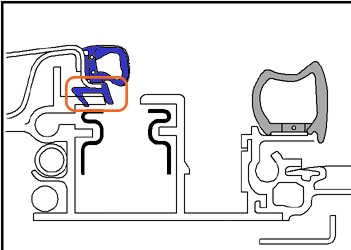
In some cases, the inner gasket (1) may have deteriorated, allowing water to seep into your car.
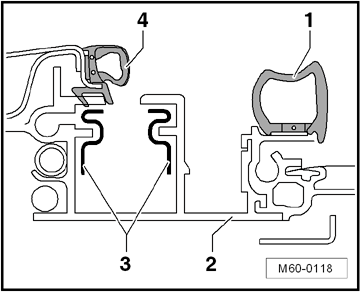
It’s easy enough to spot this problem, as the contours of the seal are very visible.
Walk around it to see where water is penetrating.
Ideally, you can replace it or seal it with silicone.
4 – Seepage through the outer seal
You can find the gasket on the website or at a VW dealer.
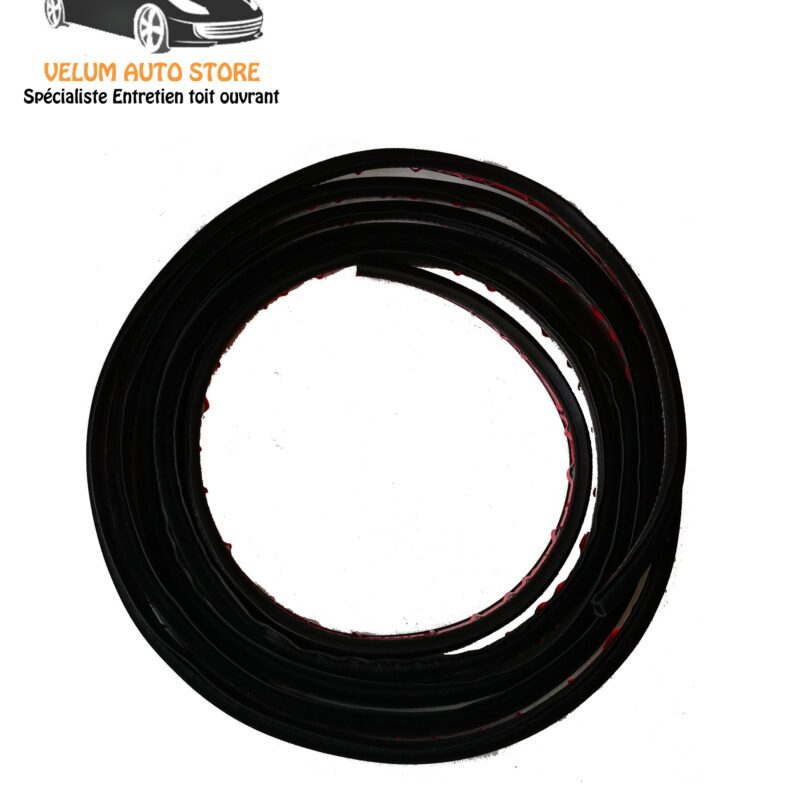
The outer gasket (4) is the seal between the body and the sunroof unit. It is visible from outside the car.
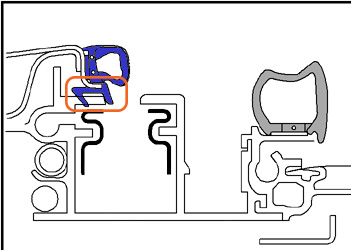
This gasket has a lip which is sandwiched between the sunroof block and the lower part of the body. The sunroof block clamps the lip to the lower part of the body.
Sometimes the lip comes out for unknown reasons. To put it back in place, you’ll need to remove the entire canopy, first to locate the leak and then to solve the problem.
Once the headliner has been removed, you’ll need to remove the screws holding the sunroof unit in place all round.
You can change the gasket if required.
The gaskets have a self-adhesive part which makes installation easier, but you must be careful not to overtighten the gasket during installation, or vice versa.
5 – Areas of the sunroof unit where seepage can occur
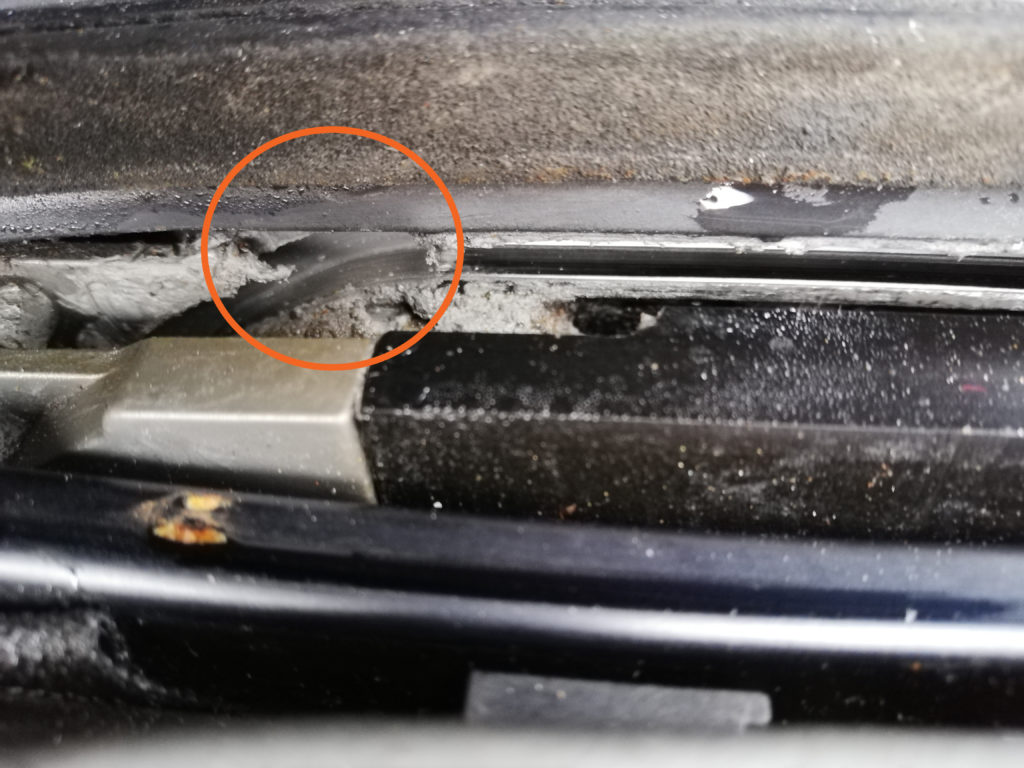
When you disassemble the sunroof assembly, you’ll see where the plastic and metal parts are joined. There’s a small thread of black silicone that ensures watertightness.
Sometimes this is insufficient, as was the case for the right front.
Exactly at the junction of the two parts of the sunroof frame, which caused a drip leak (see photo) that flooded the ground and ran down the right front side of my vehicle. The carpets and foam underneath were soaked with water.
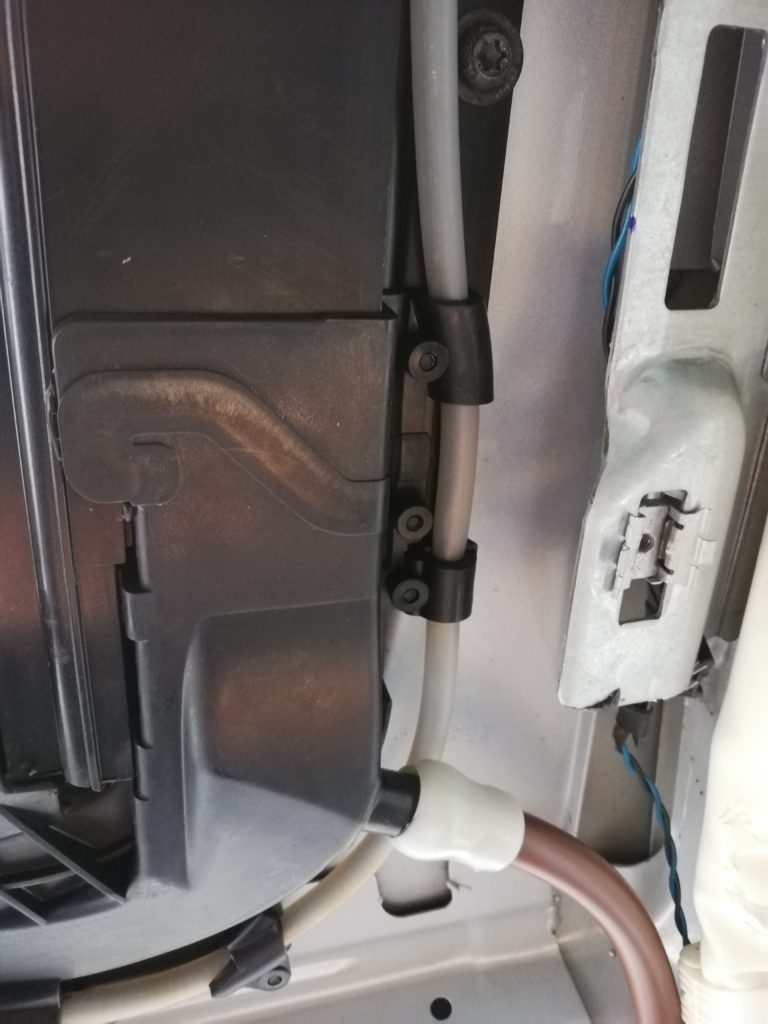
So I dismantled the roof frame and reinstalled the gasket as it should be. Then I added a small strip of silicone covering a little more surface area. see photo sorry it’s a bit dirty.
6 – Cracked sunroof frame
If you detect a cracked spot on your sunroof frame, then your sunroof frame is cracked.
This is probably the most restrictive cause of infiltration, since in many cases it requires the sunroof frame to be replaced.
However, there is one last hope that will save you from selling an organ to finance the replacement of your sunroof frame.
Once you’ve completely dismantled your roof frame, you can make a last-ditch attempt to seal the crack from the top using wet-zone sealant (pool, boat).
Make sure it’s watertight before refitting the sunroof unit.
7 – Infiltration through the rear light
Be sure to check this before undertaking the time-consuming disassembly of the headliner or roof frame.
This is not related to the sunroof, but it may suggest that water has infiltrated through the panoramic sunroof, which is not the case.
Sometimes water seeps in through one of the rear headlamps, flooding the same areas as when the panoramic sunroof is infiltrated.
In this case, changing the headlamp would be one of the suggested solutions, or using good old sealant.
8 – Infiltration through roof bar seals
Seepage through the roof bars is not very common, but water can sometimes seep through the roof bar fixing screws.
You can change the roof bar seals or use silicone sealant.
Here’s the article I wrote on the subject:

You had infiltrations that you solved say it in the comments






Add comment